Cave médiévale du XIIe siècle découverte avec l’OKM Rover C4
Une structure médiévale enfouie localisée avec succès grâce à la technologie de scan 3D du sous-sol
Une découverte archéologique passionnante a récemment été réalisée à l’aide de l’OKM Rover C4 équipé du Super Sensor. Lors de l’exploration d’un site à forte valeur historique, un prospecteur a identifié les vestiges présumés d’une entrée de cave médiévale datant du XIIe siècle. La structure détectée semble comprendre un escalier menant vers le sous-sol ainsi que plusieurs salles voûtées. Ces éléments laissent supposer l’existence d’un vaste complexe souterrain ayant probablement joué un rôle important dans le développement historique du site.
La première détection a été réalisée à l’aide du scanner de sol 3D OKM Rover C4, dont les données ont révélé des anomalies souterraines clairement compatibles avec des structures d’origine humaine. Les résultats du scan ont ensuite été confirmés par plusieurs méthodes de vérification indépendantes.

Confirmation par analyse LiDAR et étude du terrain
Afin de valider les résultats, le prospecteur a comparé les données du scan avec un modèle numérique de terrain (MNT) ainsi qu’avec des images aériennes LiDAR. Ces ensembles de données ont révélé des caractéristiques topographiques et des structures paysagères correspondant précisément à l’emplacement identifié par le Rover C4.
La combinaison du scan 3D du sous-sol et des technologies modernes de télédétection a fourni de solides indices quant à la présence d’une structure médiévale enfouie.
Les images infrarouges confirment la présence de cavités souterraines
Des images thermiques infrarouges ont apporté une confirmation supplémentaire en mettant en évidence des remontées d’air froid provenant des passages souterrains. Ce phénomène est souvent associé à la présence de cavités cachées, de tunnels ou de systèmes de caves, constituant ainsi un nouvel indice fort de l’existence du complexe souterrain.
Les images infrarouges correspondaient parfaitement aux résultats du scan et de l’analyse du terrain, renforçant ainsi la fiabilité de la découverte.


Les archéologues poursuivent les investigations
Alors que plusieurs sources indépendantes indiquent désormais l’existence d’un système de caves médiévales souterraines, la prochaine étape revient aux spécialistes de l’archéologie. Des recherches complémentaires pourraient fournir de précieuses informations sur l’histoire et la fonction originelle de cette remarquable structure.
Cette découverte démontre une nouvelle fois comment les technologies modernes de détection permettent de révéler des traces cachées du passé tout en soutenant la recherche archéologique et la préservation du patrimoine culturel.
Recevez une prime pour vos découvertes
Vous avez découvert de magnifiques reliques et souhaitez les partager (anonymement) ? Nous nous réjouissons de lire et de publier vos histoires à succès !
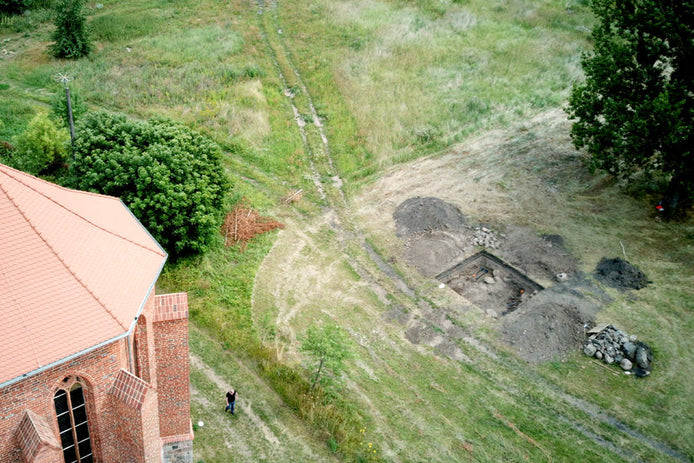
Explorations dans et autour de l'église des Templiers à Pologne
Récemment, une excavation a été réalisée en Pologne pour la recherche de tunnels et de voûtes autour et dans l'église ...
Futur concessionnaire OKM et "Le Champ des Guerriers"
Cette fois, le projet de recherche a emmené l'équipe OKM en collaboration avec Stowarzyszenie Templum et Relikte der Geschichte (Reliques ...